Thank you for supporting Atlantean Gardens! https://www.patreon.com/user?u=5703352 Robert Sepehr is an anthropologist and author http://amazon.com/Robert-Sepehr/e/B00XTAB1YC/
Showing posts with label Viracocha. Show all posts
Showing posts with label Viracocha. Show all posts
Thursday, February 20, 2020
Bearded Gods of Ancient Peru - ROBERT SEPEHR
Thank you for supporting Atlantean Gardens! https://www.patreon.com/user?u=5703352 Robert Sepehr is an anthropologist and author http://amazon.com/Robert-Sepehr/e/B00XTAB1YC/

Thursday, January 23, 2020
Ancient Race of Giants - ROBERT SEPEHR
While the Bible speaks of Giants roaming the earth in the remote past, so do many other mythologies from around the world, as quoted by the Greek poet Homer in 400 BC saying, “On the earth there once were giants”, or as communicated by native American tribes, who have a long oral tradition passed down concerning inhabitants with an unusually large demeanor.
In fact, it was non other than President Abraham Lincoln who was quoted in 1848 as saying before congress that, "The eyes of that species of extinct giant, whose bones fill the mounds of America, have gazed on Niagara as our eyes do now." What was this giant species Lincoln spoke of, a race many presume to be of a tall, strong, and intellectually sophisticated people? During the last several centuries, the remains of hundreds of Giant humans have been discovered on US soil, and reported on in a variety of news outlets, back before the media was consolidated into the hands of a few.
In fact, it was non other than President Abraham Lincoln who was quoted in 1848 as saying before congress that, "The eyes of that species of extinct giant, whose bones fill the mounds of America, have gazed on Niagara as our eyes do now." What was this giant species Lincoln spoke of, a race many presume to be of a tall, strong, and intellectually sophisticated people? During the last several centuries, the remains of hundreds of Giant humans have been discovered on US soil, and reported on in a variety of news outlets, back before the media was consolidated into the hands of a few.
Robert Sepehr is an anthropologist and author
http://amazon.com/Robert-Sepehr/e/B00XTAB1YC/ Facebook: https://www.facebook.com/atlanteangardens/
https://www.facebook.com/robertsepehr/
https://www.facebook.com/groups/robertsepehr/ Twitter: https://twitter.com/robertsepehr Youtube: https://www.youtube.com/channel/UCMqG0kLgrRv9tODTDG12oZA https://www.youtube.com/channel/UC0gkKMGpCgyun7OoEOseryg Thank you for supporting Atlantean Gardens! https://www.patreon.com/user?u=5703352
http://amazon.com/Robert-Sepehr/e/B00XTAB1YC/ Facebook: https://www.facebook.com/atlanteangardens/
https://www.facebook.com/robertsepehr/
https://www.facebook.com/groups/robertsepehr/ Twitter: https://twitter.com/robertsepehr Youtube: https://www.youtube.com/channel/UCMqG0kLgrRv9tODTDG12oZA https://www.youtube.com/channel/UC0gkKMGpCgyun7OoEOseryg Thank you for supporting Atlantean Gardens! https://www.patreon.com/user?u=5703352
Tuesday, December 17, 2019
Hidden History of the Holocene - ROBERT SEPEHR
Anthropologically speaking, human pre-history is divided up into certain segments, some minor and some major, but none more important than the division between the Pleistocene, which includes the time most popularly known as the ice age, and the Holocene, which is our current age for the past 10-12,00 years or so, a time following some major global cataclysms, upheavals, and mass extinctions.
That said, we can further dissect the current Holocene into the neolithic, or stone age, when agriculture appears, or possibly re-appears, when the tools and weapons archeologists find are made from polished stone, starting at around 11 or 12 thousand years ago. This period is followed by the copper age at around 3500 BC - 2500 BC, an era of transition between the stone tool-using farmers of the Neolithic, and the metal-obsessed civilizations of the Bronze Age.
Could there have been a trans Atlantic copper trade in ancient times, and if so, who could have done it? Phoenician comes from the Greek word 'phoinos', meaning 'red'.
Did you know that a sea-faring American tribe explored the shores of North America 7000 years ago? Or that these ancient Americans rivaled their European counterparts in navigational skills several millennia before the Vikings?
Robert Sepehr is an anthropologist and author http://amazon.com/Robert-Sepehr/e/B00XTAB1YC/ Facebook: https://www.facebook.com/atlanteangardens/ https://www.facebook.com/robertsepehr/ https://www.facebook.com/groups/robertsepehr/ Twitter: https://twitter.com/robertsepehr Youtube: https://www.youtube.com/channel/UCMqG0kLgrRv9tODTDG12oZA https://www.youtube.com/channel/UC0gkKMGpCgyun7OoEOseryg Thank you for supporting Atlantean Gardens! https://www.patreon.com/user?u=5703352
Robert Sepehr is an anthropologist and author http://amazon.com/Robert-Sepehr/e/B00XTAB1YC/ Facebook: https://www.facebook.com/atlanteangardens/ https://www.facebook.com/robertsepehr/ https://www.facebook.com/groups/robertsepehr/ Twitter: https://twitter.com/robertsepehr Youtube: https://www.youtube.com/channel/UCMqG0kLgrRv9tODTDG12oZA https://www.youtube.com/channel/UC0gkKMGpCgyun7OoEOseryg Thank you for supporting Atlantean Gardens! https://www.patreon.com/user?u=5703352
Friday, May 11, 2018
The First Americans 卐 Civilizations of the New World - ROBERT SEPEHR
New archaeological evidence suggests that America was first discovered by Stone Age people from Europe – 10,000 years before the Siberian-originating ancestors of the American Indians set foot in the New World. A remarkable series of several dozen European-style stone tools, dating back between 19,000 and 26,000 years, have been discovered at six locations along the US east coast.

The new discoveries are among the most important archaeological breakthroughs for several decades - and are set to add to our understanding of humanity's spread around the globe. Robert Sepehr is an author, producer and independent anthropologist. Thank you for the support!

Sunday, March 18, 2018
DNA Results of Ancient Native American Mummies - ROBERT SEPEHR
The Windover Archeological Site is an Early Archaic (6000 to 5000 BC) archaeological site where skeletal remains of 168 individuals were found buried in the peat at the bottom of the pond. The skeletons were well preserved because of the characteristics of peat. In addition, remarkably well-preserved brain tissue has been recovered from many skulls from the site. DNA from the brain tissue has been sequenced. The collection of human skeletal remains and artifacts recovered from Windover Pond represent among the largest finds of each type from the Archaic Period.

Archaeologists at this site were able to recover a total of 86 pieces of fabric from 37 graves. These included seven different textile weaves, which appeared to have been used for clothing, bags, matting, and possibly blankets and ponchos. Numerous other artifacts, such as atlatls and projectile points, were also found at Windover. The occupants of Windover hunted animals, fished, and gathered plants. They used bottle gourds for storage, which comprise the earliest evidence for vegetable container storage discovered in North America.

Robert Sepehr is an author, producer and independent anthropologist specializing in linguistics, archeology, and paleobiology (archeogenetics). Thank you for the support! https://www.patreon.com/user?u=5703352
Saturday, February 25, 2017
Tequila, Cocaine, and Ancient Mummies
Tobacco and various hallucinogenic drugs were smoked all over the Americas as early as 5000 BC, in shamanistic rituals. Traces of cocaine and tobacco, plants only to have existed in the Americas prior to Columbus, were found in some Egyptian mummies.
Robert Sepehr is an author, producer, and anthropologist specializing in linguistics, archeology, and paleobiology (archeogenetics). READ: Species with Amnesia: Our Forgotten History

Robert Sepehr is an author, producer, and anthropologist specializing in linguistics, archeology, and paleobiology (archeogenetics). READ: Species with Amnesia: Our Forgotten History

Tuesday, May 26, 2015
Occult Secrets of Vril

Is mankind on the threshold of a new age of enlightenment? Or are we descending a dwindling spiral, doomed to repeat the lessons from history which we either forget or never seem to learn?
In pre-WWII Germany, the Vril Society used the swastika emblem to link Eastern and Western occultism. They advanced the idea of a subterranean matriarchal utopia ruled by a race of Aryan beings who had mastered a mysterious force called Vril. This breakaway civilization had survived the antediluvian cataclysms which ended the ice age, and passed on their guarded occult knowledge through initiation into sacred mystery schools. Vril was known to these mystics as a natural and abundant energy, having disseminated it's divine wisdom world wide under many names. The Chinese referred to it as "chi", the Hindu as "prana", and the Japanese as "reiki". Albert Pike said:
"There is in nature one most potent force, by means whereof a single man, who could possess himself of it, and should know how to direct it, could revolutionize and change the face of the world."
Helena Blavatski, the foundress of the Theosophical Society, described this Vril energy as an aether stream that could be transformed into a physical force. What are the Occult Secrets of Vril?
Read More:

Sunday, August 24, 2014
Pre-Inca Observatory Is Oldest in Americas, Study Says
A mysterious set of massive monuments in Peru make up the oldest solar observatory in the Americas, according to a new study. The 2,300-year-old Thirteen Towers of Chankillo were used for marking the sun's position throughout the year—an activity that was part of the sun-worshipping culture of the Inca, scientists recently announced.

The large stone towers are arranged in a line along a ridge near Chankillo, a walled hilltop ruin north of Lima. "This is the oldest known example of landscape timekeeping in the Americas," said Ivan Ghezzi, lead author of the study and an archaeologist at the Pontifical Catholic University of Peru. Ghezzi and archaeo-astronomer Clive Ruggles of the University of Leicester, England, report their findings in a recent issue of the journal Science.
 The Inca civilization, which took power in the region around A.D. 1200, are known to have kept track of the positions on the horizon where the sun rose and set. Writings by Spanish conquerors describe the Inca's methods of tracking these positions using sets of pillars.
 But nearly all of these markers were apparently destroyed in a campaign to undermine the Inca Empire in the mid- to late 1500s.
"Astronomy was the backbone of the political and ideological system that supported the authority of the Inca rulers," Ghezzi said.
The Chankillo site appears to have been used only from about 300 B.C. to A.D. 1, meaning that an unidentified pre-Inca culture built the monuments. Only one similar site in the Americas had been spotted so far, on the Island of the Sun in Lake Titicaca, on the border between Bolivia and Peru.

"Now we know how far back the solar cult goes," Ghezzi said. "What the documents are telling us about the Incas [using pillars to track the sun] is correct." The Chankillo towers vary from 7 to 20 feet (2 to 6 meters) high. But they are as precisely spaced as the teeth of a comb—roughly 15 feet (5 meters) apart. They seem to be marking regular divisions of the year for a solar calendar, the study authors said.

The scientists also found that one of the nearby buildings had an odd architectural feature: a 131-foot-long (40-meter-long) corridor running along the side that lacked any windows or doors into the main building.
"The best explanation for that architectural space is it led people to an observation point to have a full view of the towers," Ghezzi said.
Throughout the year, the points along the horizon where the sun rises and sets trace an arc. In Peru the sun rises and sets farthest north on the longest day of the year, the winter solstice, and farthest south on the shortest day, the summer solstice.
Day and night are roughly equal in length during the autumnal and vernal equinoxes. Only from the vantage point at the opening of the corridor do the towers precisely span the solar arc. It appears the opening of this corridor was a ceremonial site where people made offerings, since the researchers found a variety of artifacts ritually buried there.

There also appears to be another observation spot on the other side of the ridge for watching the setting sun. "Individuals with the status to access [these observation spots] and conduct ceremonies would have had the power to regulate time, ideology, and the rituals that bound this society together," Ghezzi and Ruggles wrote in their paper.
David Dearborn, a physicist at Lawrence Livermore National Laboratory in California who studies ancient astronomy, called the new study "a very credible case." "With the abundant evidence for Inca interest in astronomy, and for its use in social organization, archaeologists have long suspected that earlier cultures also may have engaged in such activities," he said. "Finally, in this work, material evidence is presented that strongly supports such suspicions."

Brian Bauer, an archaeologist at the University of Illinois in Chicago, agreed. "There are various announcements like this every year, but most of them are not very rigorous," Bauer said. "I found this [study] very, very convincing," he added. "It ties in with what we already knew about the Incas. "It shows they were both using a solar calendar and [that] the solstices were used to mark the beginning and end of the year. Because it was being carefully observed, there were probably large rituals associated with this."
Other researchers have made claims of ancient observation sites in the Americas, some of which would outdate Chankillo. Last May, for example, Robert Benfer of the University of Missouri and colleagues announced their discovery of the oldest astronomical observatory in the Western Hemisphere at another site near Lima. The so-called Buena Vista site dates back 4,200 years—making it 1,900 years older than the Chankillo site.

Wednesday, August 6, 2014
Modern Humans are a Hybrid Species - ROBERT SEPEHR

It is now scientifically irrefutable fact that the "human species" has been found to contain a substantial quantity of DNA (at least 20%) from other hominid populations not classified as Homo sapien; such as Neanderthal, Denisovan, African archaic, Homo erectus, and now possibly even "Hobbit" (Homo floresiensis).
If not given drugs to prevent infant death, the pregnant body of a rhesus negative mother will attack, try to reject, and even kill her own offspring if it is by a rhesus positive man.
The Domestic dog (Canis lupus familiaris) is a sub-species of the gray wolf (Canis lupus), and they produce hybrids.
There are numerous other examples of where two separate species (for example with different numbers of chromosomes) can also produce viable offspring, yet are considered separate species. That said, humanity has been shown to be, genetically speaking, a hybrid species that did not all share the same hunter-gatherer ancestry in Africa.
Recent sequencing of ancient genomes suggests that interbreeding went on between the members of several ancient human-like groups more than 30,000 years ago, including an as-yet unknown human ancestor. "there were many hominid populations,” says Mark Thomas, evolutionary geneticist at University College London.
Recent genetic studies are touting shocking headlines about how ancient humans 'rampantly interbred' and indulged in inter-species interracial sex with multiple mystery sub-races in a "Lord Of The Rings"-style world of different creatures, including mystery DNA - neither human nor Neanderthal, not yet identified.


Scientific evidence refuting the theory of modern humanity’s African genesis is common knowledge among those familiar with the most recent scientific papers on the human Genome, Mitochondrial DNA and Y-chromosomes. Regrettably, within mainstream press and academia circles, there seems to be a conspicuous – and dare we say it – deliberate vacuum when it comes to reporting news of these recent studies and their obvious implications.
Australian historian Greg Jefferys explains that, "The whole ‘Out of Africa’ myth has its roots in the mainstream academic campaign in the 1990′s to remove the concept of Race. When I did my degree they all spent a lot of time on the ‘Out of Africa’ thing but it’s been completely disproved by genetics. Mainstream still hold on to it."
It did begin the early 90’s. And the academics most responsible for cementing both the Out-of Africa theory and the complementary common ancestral African mother – given the name of “Eve” – in the public arena and nearly every curriculum, were Professors Alan C. Wilson and Rebecca L. Cann.
In their defense, the authors of this paper were fully aware that genealogy is not in any way linked to geography, and that their placement of Eve in Africa was an assumption, never an assertion.
A very recent paper on Y-chromosomes published in 2012, (Re-Examing the “Out of Africa” Theory and the Origin of Europeoids (Caucasians) in the Light of DNA Genealogy written by Anatole A. Klyosov and Igor L. Rozhanski) only confirms the denial of any African ancestry in non-Africans, and strongly supports the existence of a “common ancestor” who “would not necessarily be in Africa. In fact, it was never proven that he lived in Africa.”
Central to results of this extensive examination of haplogroups (7,556) was the absence of any African genes. So lacking was the sampling of African genetic involvement, the researchers stated in their introduction that, “the finding that the Europeoid haplogroups did not descend from “African” haplogroups A or B is supported by the fact that bearers of the Europeoid, as well as all non-African groups do not carry either SNI’s M91, P97, M31, P82, M23, M114, P262”.

With the haplogroups not present in any African genes and an absence of dozens of African genetic markers, it is very difficult nigh on impossible to sustain any link to Africa. The researchers are adamant that their extensive study “offers evidence to re-examine the validity of the Out-of-Africa concept”.
They see no genetic proof substantiating an African precedence in the Homo sapien tree, and maintain that “a more plausible interpretation might have been that both current Africans and non-Africans descended separately from a more ancient common ancestor, thus forming a proverbial fork”.
We regard the claim of “a more plausible explanation” as a gross understatement, since there is absolutely nothing plausibly African turning up in any test tubes. In fact, the researchers made note of their repeated absence stating “not one non-African participant out of more than 400 individuals in the Project tested positive to any of thirteen ‘African’ sub-clades of haplogroup A”. The only remaining uncertainty relates to the identity of this “more ancient common ancestor”. All that can be stated with confidence is that humanity’s ancestor did not reside in Africa.
Unfounded accusations of racism have become common as the prevailing Afrocentric hypothesis is constantly being challenged by the growing mountain of conflicting scientific evidence, especially in the evolving field of genetics.
Thursday, July 3, 2014
Maori Legend: Blonde Mummies of the South Pacific
Maori oral traditions state that, upon arrival in New Zealand, Maori found that there was a large, well-established population already living in the country. The inhabitants were described as having skin complexion that was white to light-ruddy, with eye colors from blue to green to darker tints.

Their hair color ranged from white and golden, with red being predominant in the general population.
The Maori term Pakeha, later used to describe white colonial Europeans, was derived from the ancient name Pakepakeha used to describe the former white population.
Pocket groups of these first inhabitants survived into the 20th century and are well-remembered by old-timers as the red headed, freckle-faced Maoris or Waka blondes.
The Maori term Pakeha, later used to describe white colonial Europeans, was derived from the ancient name Pakepakeha used to describe the former white population.
Pocket groups of these first inhabitants survived into the 20th century and are well-remembered by old-timers as the red headed, freckle-faced Maoris or Waka blondes.
Scholars probing definitions and development of the Maori term "Pakeha" (Maori name for white people) state the following:
The derivation seems to be from ‘Pakepakeha’ mythical people who are mischievous beings, with fair skin and hair who lived deep in the forest, coming out at night.
The ‘Pakepakeha’ are also linked to ‘Patupaiarehe’ by their fair skin and hair. The ‘Patupaiarehe’ had fair skin and beautiful voices, and gave people the secret of fishing with nets. These creatures’ possess canoes made of reeds, which can change magically into sailing vessels. The ‘Patupaiarehe’ can also be linked to Nahe’s version of Pakeha as an abbreviation of ‘Paakehakeha’, gods of the ocean who had the forms of fish and man (Biggs, 1988).
The ‘Pakepakeha’ are also linked to ‘Patupaiarehe’ by their fair skin and hair. The ‘Patupaiarehe’ had fair skin and beautiful voices, and gave people the secret of fishing with nets. These creatures’ possess canoes made of reeds, which can change magically into sailing vessels. The ‘Patupaiarehe’ can also be linked to Nahe’s version of Pakeha as an abbreviation of ‘Paakehakeha’, gods of the ocean who had the forms of fish and man (Biggs, 1988).
 |
| A New Zealand stamp portrays the pre-Maori Patu-paiarehe people, now relegated to the realm of myth and legend. |
The coffins seen above were photographed in 1919 high up a cliff-face at a very remote part of New Zealand. Each coffin was hewn-out by stone tools from a single log, like a dugout canoe. These skeletons display recognisable European physiology. They were already very old when found in isolated country, far from the consecrated ground of a churchyard. The deceased people were, undoubtedly, the white Ngati Hotu, known in local Maori and European folklore to have hidden from the cannibals for centuries in this inhospitable region.

After the coming of the Polynesian-Melanesian cannibals to New Zealand, the earlier people were hunted to extinction as a food source. Many of the Patu-paiarehe or Turehu women were forcibly absorbed into the Maori tribes as slaves. Fugitives or survivors amongst the earlier people moved to the very rugged and remote interior of the country and lived in the deep forests or dark caves, many succumbing to lung ailments from hiding out by day and foraging by night.
Ancient Tattooed Aryan Mummies of Asia

READ: Species with Amnesia

READ: Species with Amnesia
Robert Sepehr is an anthropologist and author
http://amazon.com/Robert-Sepehr/e/B00XTAB1YC/
Facebook:
https://www.facebook.com/atlanteangardens/
https://www.facebook.com/robertsepehr/
https://www.facebook.com/groups/robertsepehr/
Twitter:
https://twitter.com/robertsepehr
Youtube:
https://www.youtube.com/channel/UCMqG0kLgrRv9tODTDG12oZA
https://www.youtube.com/channel/UC0gkKMGpCgyun7OoEOseryg
Thank you for supporting Atlantean Gardens!
https://www.patreon.com/user?u=5703352
http://amazon.com/Robert-Sepehr/e/B00XTAB1YC/
Facebook:
https://www.facebook.com/atlanteangardens/
https://www.facebook.com/robertsepehr/
https://www.facebook.com/groups/robertsepehr/
Twitter:
https://twitter.com/robertsepehr
Youtube:
https://www.youtube.com/channel/UCMqG0kLgrRv9tODTDG12oZA
https://www.youtube.com/channel/UC0gkKMGpCgyun7OoEOseryg
Thank you for supporting Atlantean Gardens!
https://www.patreon.com/user?u=5703352
Wednesday, June 11, 2014
Massive Ancient Settlement Unearthed in Puerto Rico

Bodies, structures, and rock art thought to belong to an indigenous pre-Columbian culture have been unearthed at an ancient settlement in Puerto Rico, officials recently announced. Archaeologists say the complex could be the most significant of its kind in the Caribbean.
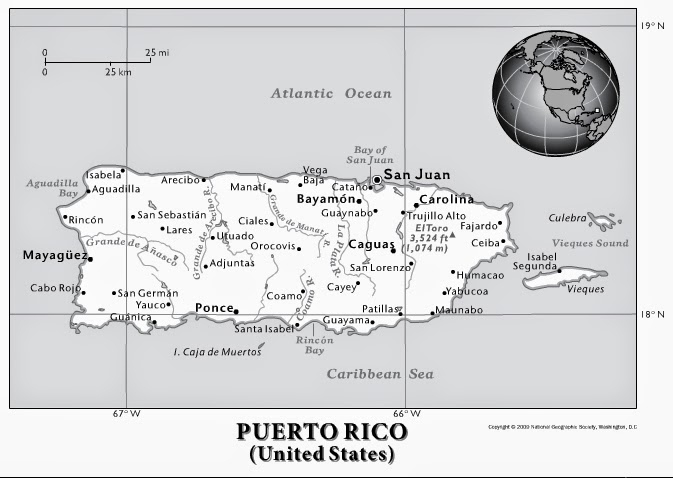
"This is a very well preserved site," said Aida Belén Rivera-Ruiz, director of Puerto Rico's State Office of Historic Preservation.
"The site seems to show two occupations: a pre-Taino and a Taino settlement." The Taino are thought to be a subgroup of the Arawak Indians who migrated to the Caribbean from Mexico or South America hundreds of years ago, experts say. They were among the first tribes to encounter Europeans.
Archaeologists have known since 1985 that the area contained indigenous artifacts. But the scope of the site became clear only recently, as the U.S. Army Corps of Engineers began construction on a new dam.
Perhaps the most significant find is a large plaza covering an area of about 130 by 160 feet. The plaza, which contains stones etched with ancient petroglyphs, might have been a court used for ceremonial rituals or ball games.

"If this information is confirmed, this would be the largest known indigenous batey in the Caribbean," Rivera-Ruiz said. Roberto Mucaro Borrero, a representative of the United Confederation of Taino People, agreed. The site "could be the largest ancient Taino cultural area found not only in Puerto Rico but throughout the Caribbean," Borrero said.
And petroglyphs of a masculine figure with frog legs could prove especially important in understanding the culture's roots, he added. "They could reveal evidence of direct links between the Taino and the Mayan peoples," he said.
Confusion and criticisms are already swirling amidst excitement over the findings. Initial reports about bodies found in several graves at the site suggest that the people were buried in unique positions. The bodies were "buried facedown with the legs bent at the knees—a style never seen before in the region," the Associated Press reported.
But Miguel Rodriguez, a member of the Puerto Rican government's archaeological council, said the burial positioning isn't unheard of in the area.
Kit Wesler, a Taino expert at Murray State University in Kentucky, also said that the "facedown position is unusual but probably not unprecedented." Rivera-Ruiz of the state preservation office stressed that any claims about the uniqueness of the burial arrangements must await a full excavation and studies of any funerary objects.

Monday, May 26, 2014


Saturday, May 17, 2014
Ancient Giants of the New World - ROBERT SEPEHR

According to Paiute Indian oral legends, a tribe called the Si-Te-Cah were a native American race of tall red-haired giants that once occupied the area in the distant past.
Amazingly, 9,400 year old Mummified remains were indeed found in a cave in Nevada, though scientific study is NOT allowed on the remains for political reasons.
Sarah Winnemucca Hopkins, a prominent female Native American activist, educator, and daughter of Paiute Chief Winnemucca, related many stories passed down in her tribe, first hand, about the Si-Te-Cah in her book Life Among the Paiutes, published in 1883.
"My people say that the tribe we exterminated had red hair. I have some of their hair, handed down from father to son. I have a dress which has been in our family a great many years, trimmed with the reddish hair. I am going to wear it some time when I lecture. It is called a mourning dress, and no one has such a dress but my family."

The oldest mummies in the world are the Chinchorro mummies from northern Chile and southern Peru. While the earliest Egyptian artificial mummy dates to around 3000 BC, the earliest Chinchorro artificial mummy dates to around 5050 BC. And while the earliest Egyptian natural mummy (red-head named "Ginger") dates to around 3400 BC, the earliest Chinchorro natural mummy dates to around 7020 BC.
The Chinchorro culture was the only Andean culture that performed mummification on all members of their society. In all of the other Andean cultures, only the elite were mummified. These photographs of Chinchorro mummies show that they have Caucasoid hair and features. This may mean that only the Chinchorro culture consisted exclusively of Caucasoids, and that all of the other Andean cultures were comprised of a Caucasoid elite ruling over a Mongoloid proletariat.

"Native Races of the Pacific States" by Hubert Bancroft, published in 1874, Bancroft says that in Peru there were "numerous vague traditions of settlements or nations of white, bearded men, clad in long robes, who regulated the calendar, and were possessed of an advanced civilization".
A major burial site of the Nazca culture was the Chauchilla Cemetery, established in 200 AD, used for 600 to 700 years. The hair of the mummies are obviously Caucasoid and they’re all wearing long robes. The ceramic vessels were produced by the Moche culture (100 to 800 AD), they all have beards, their facial features are Caucasoid, and again, they’re all wearing long robes.

The photograph below of the village Wari mummies, one of the many pre-Inca peoples who inhabited the area now known as Lima in Peru. They were directly taken from a pyramid bearing the blue-eyed masks you see in the picture. Besides the mummy wrapped in six layers of wool, needles were found and other textile materials.

All over the New World we find legends of Quetzalcoatl (by Aztecs), Kukulkan (by Mayans), Amalivaka (by Tamanacs), Manco-Capac (by Incans), Viracocha (by Aymaras). All of them describe: a tall white man, blue eyed, with long blond-reddish hair and beard. Numerous PRE-HISPANIC Caucasian mummies have been found in South America with fair hair, some with blue stones covering the eyes, as well as gold masks with similar striking blue eyes, matching the legends of the pale-skinned Sun-gods.

Two thousand years ago a mysterious and little known civilization, with a blue-eyed elite, ruled the northern coast of Peru. Its people were called the Moche. They built huge pyramids that still dominate the surrounding countryside; some well over a hundred feet tall. The Lord of Sipán tomb is held by some archaeologists to be one of the most important archaeological discoveries in this region of the world in the last 30 years, as the main tomb was found intact and untouched by thieves.

Pizarro asked who the white skinned redheads were. The Inca Indians replied that they were the last descendants of the Viracochas. The Viracochas, they said, were a divine race of white men with beards. They were so like the Spanish that the Europeans were called Viracochas the moment they came to the Inca Empire. The Incas thought they were the Viracochas who had come sailing back across the Pacific.

According to the principal Inca legend, before the reign of the first Inca, the sun-god, Con-Ticci Viracocha, had taken leave of his kingdom in present day Peru and sailed off into the Pacific with all his subjects.

When the Spaniards came to Lake Titicaca, up in the Andes, they found the mightiest ruins in all South America - Tiahuanaco. They saw a hill reshaped by man into a stepped pyramid, classical masonry of enormous blocks, beautifully dressed and fitted together, and numerous large statues in human form.
They asked the Indians to tell them who had left these enormous ruins. The well known chronicler, Cieza de Leon, was told in reply that these things had been made long before the Incas came to power. They were made by white and bearded men like the Spaniards themselves.
The White men had finally abandoned their statues and gone with the leader, Con-Ticci Viracocha, first up to Cuzco, and then down to the Pacific. They were given the Inca name of Viracocha, or "sea foam', and vanished over the sea.
Archeologists have discovered a lost city deep within the Amazon rain forest of the long-lost tribe of white-skinned, blonde-haired people called the Cloud People. The Cloud People, also known in legend as “the white warriors of the clouds” established expansive pre-Inca kingdom located in the northern regions of the Andes in present-day Peru. Other pre-Hispanic groups referred to the Cloud People... as “White Gods” due to their height, blonde hair and blue eyes. According to Inca legend, the Chachapoyas remembered that their ancestors came from the East.

Aztec codices are books written by pre-Columbian and colonial-era Aztecs. Note that the giant pictured below has a name near him, the text reads Quinametzin, one of the old ones.

Friday, May 16, 2014
The Legendary Lost Continent of Mu - ROBERT SEPEHR
 In the records of the old Buddhist Temple at Lhasa there is to be seen an ancient Chaldean inscription written about 2,000 years B.C. It reads:
"When the star Bal fell on the place where is now only sea and sky the Seven Cities with their Golden Gates and Transparent Temples quivered and shook like the leaves of a tree in storm. And behold a flood of fire and smoke arose from the palaces. Agony and cries of the multitude filled the air. They sought refuge in their temples and citadels.
And the wise Mu, the hieratic of Ra-Mu, arose and said to them: 'Did not I predict all this?'
And the women and the men in their precious stones and shining garments lamented: 'Mu, save us.' And Mu replied: 'You shall die together with your slaves and your riches and from your ashes will arise new nations. If they forget they are superior, not because of what they put on, but of what they put out, the same lot will befall them!' Flame and smoke choked the words of Mu. The land and its inhabitants were torn to pieces and swallowed by the depths."

Below is the translation of a Maya manuscript which is part of the famous collection of Le Plongeon, the Troano manuscript. It can be seen in the British Museum.

"In the year of 6 Kan, on the 11 Muluc, in the Month Zac, there occured terrific earthquakes which continued without interruption until the 13 Chuen. The country of the hills of mud, the Land of Mu, was sacrificed. Being twice upheaved it disappeared during the night, being continually shaken by the fires of the under earth. Being confined these caused the land to sink and rise several times and in various places. At last the surface gave way, and then ten countries were torn asunder and scattered. They sank with their 64,000,000 of inhabitants 8,000 years before the writing of this book."
How account for these two stories - one from Tibet, the other from Central America, each mentioning the same cataclysm and each referring to the land of Mu?

Species with Amnesia - Occult Secrets of Vril

Thank You for supporting Atlantean Gardens!
https://www.patreon.com/
Thank You for supporting Atlantean Gardens!
https://www.patreon.com/
Subscribe to:
Posts (Atom)